A balcony the size of a dining table, a step by the back door, a windowsill that catches six good hours of light: that is enough to grow something worth eating or looking at. Containers remove most of the usual obstacles. There is no digging, no bed to prepare, no long weeding session on a Saturday. What they do demand is that you respect the limits of a pot. Roots cannot wander in search of water, and a few litres of compost hold only so much nutrition. Get those two facts straight and the rest comes down to choosing plants that suit the spot you actually have.
Start with the pot, not the plant
The most common beginner mistake is falling for a plant at the nursery and then hunting for something to put it in. Work the other way round. A bigger pot is almost always the kinder choice: more compost means more moisture in reserve and less chance of a plant drying out between breakfast and dinner.
As a rough guide, salad leaves and radishes need about 15–20cm of depth, herbs and strawberries around 20–25cm, bush beans 30cm, and tomatoes or peppers 30–40cm with a similar width. A pot that is too small will not just dry out faster; it will also stunt the plant, and no amount of feeding fixes cramped roots.
- Drainage holes are not optional. Skip the layer of gravel at the bottom; it does not improve drainage. Fill with compost and stand the pot on feet or a saucer.
- Use potting mix, not garden soil. Garden soil compacts in a container, drains badly and may bring in weeds and pests.
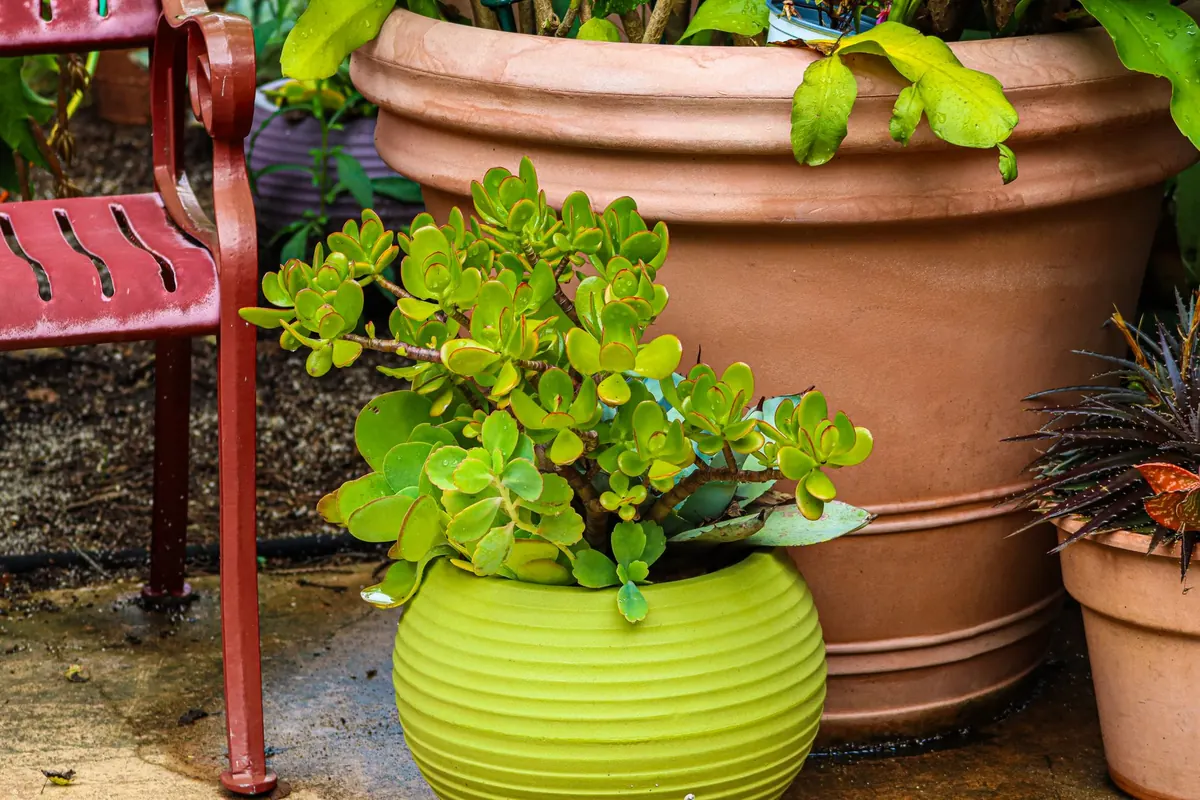
- Mind the material. Terracotta and fabric pots dry out quicker; glazed ceramic and plastic hold moisture longer. Both are fine, but they change how often you water.
- Match pot to plant. Two courgette plants in one small tub will disappoint you; both will sulk.
Watering: the habit that decides everything
Container plants live or die by watering, and the trick is to stop watering by the calendar. Push a finger 2–3cm into the compost. If it feels damp, wait. If it is dry, water properly: slowly, until it runs out of the bottom of the pot. Then empty the saucer half an hour later so the roots are not sitting in a puddle. Lifting the pot is another reliable check; a dry pot feels surprisingly light.
Morning is the best time, because the plant has water for the heat of the day and the foliage dries before evening. On a hot spell, small pots on a sunny balcony may need water twice a day, while a large tub in partial shade might go three days. A thin layer of compost or bark mulch on the surface slows evaporation more than you would expect.
Work out how much sun you really get
Do not guess from a single glance out of the window. Look at the space three times in a day: mid-morning, early afternoon and late afternoon. Where the shadow falls tells you what will grow. Fruiting crops such as tomatoes, peppers, chillies and beans want six hours or more of direct sun. Leafy crops, chard, radishes and most herbs manage well on four to six hours, and they often prefer a break from the fiercest afternoon heat. If your space is shaded for most of the day, choose mint, chard and chives rather than chasing a tomato crop that will never ripen.
Sun is a currency in a small garden. Spend the brightest spot on the plant you most want to harvest.
12 plants that rarely disappoint in pots
- Cherry tomatoes. Pick a compact bush variety, give it a 30–40cm pot, and put a stake in at planting rather than wrestling one in later. Water steadily; irregular watering often plays a part in split fruit and blossom end rot.
- Chillies and sweet peppers. Slow to start but generous in a warm spot. One plant per 25–30cm pot, full sun, and a liquid feed once the first flowers appear.
- Bush beans. No staking, and a crop in about eight weeks. Sow five or six seeds in a 30cm pot and repeat every three weeks for a longer season.
- Lettuce and cut-and-come-again leaves. Happy in 15–20cm of compost and a little shade. Harvest outer leaves instead of pulling the whole plant, and sow a small pinch every fortnight.
- Radishes. The quickest reward on this list, ready in roughly four weeks. Water consistently or they turn woody and run to seed.
- Swiss chard. Attractive in a pot and tolerant of partial shade. One plant per 20cm container, and keep cutting the outer stems.
- Basil. Loves heat and steady moisture. Pinch the growing tips often to keep it bushy. One plant in its own 20cm pot beats a crowded supermarket clump.
- Mint. Always give it a pot of its own; it spreads by runners and will crowd out neighbours. Partial shade suits it.
- Rosemary. Wants full sun, sharp drainage and a gritty mix. Water it, then let it dry out reasonably well before the next drink.
- Strawberries. A 20–25cm pot in sun, with a feed after fruiting. Snip runners if you want the energy to go into berries rather than new plants.
- Marigolds. Quick, bright and flowering for months. Deadhead regularly and they will keep going into autumn.
- Petunias or trailing calibrachoa. Ideal for baskets and rail planters. They need sun, regular watering and a mid-season trim to stop them going straggly.
Feeding, and the mid-summer slump
Compost in a pot runs out of nutrients long before the season ends. Mix a slow-release fertiliser into the compost at planting, then start liquid feeding when the plants are growing strongly, usually every one to two weeks. Tomatoes, peppers and flowers are hungry; leafy herbs need far less, and overfeeding basil or parsley gives you lush leaves with little flavour.
When plants look tired in July, check water and roots before reaching for the bottle. Yellowing lower leaves can mean waterlogged roots rather than hunger, and a pot crammed with roots may simply need repotting into something larger.
Begin small, then expand
Three pots is a sensible first season: one fruiting plant, one leafy crop and one herb. Put them where you will walk past them daily, because most container problems are spotted early simply by looking. Water in the morning, feed when growth is strong, and keep a few notes on what worked and what dried out. Next spring you will know your sunniest corner, how thirsty your pots really are, and which plants earned their space.
Photo: Karen F / Pexels