A backyard barbecue rarely fails because the burgers were dry. It fails because the coals were still grey when everyone arrived hungry, because the only shade was inside the house, and because twelve people were trying to balance paper plates on their knees. These are small planning problems, and every one of them has a fix you can put in place before the first guest walks through the gate.
1. Lighting the grill when the doorbell rings
Charcoal takes 20 to 30 minutes to ash over, and a gas grill needs a good 10 to 15 minutes to come up to temperature. Start either one at the same moment your guests pull into the driveway and you have already lost the first half hour of the party to standing around with a drink in one hand and nothing to eat.
Light the chimney before the first arrival, or set out a round of snacks that need no grill at all — olives, a bowl of chips, sliced vegetables with dip, a plate of cheese. That buys you a relaxed twenty minutes and keeps people from hovering over the lid asking whether it is nearly ready.
2. Cooking everything at the same temperature
The classic mistake is a single blazing-hot grill with corn, chicken and burgers all fighting for space at once. Something scorches, something else stays raw in the middle, and you end up serving in shifts while the first plates go cold.
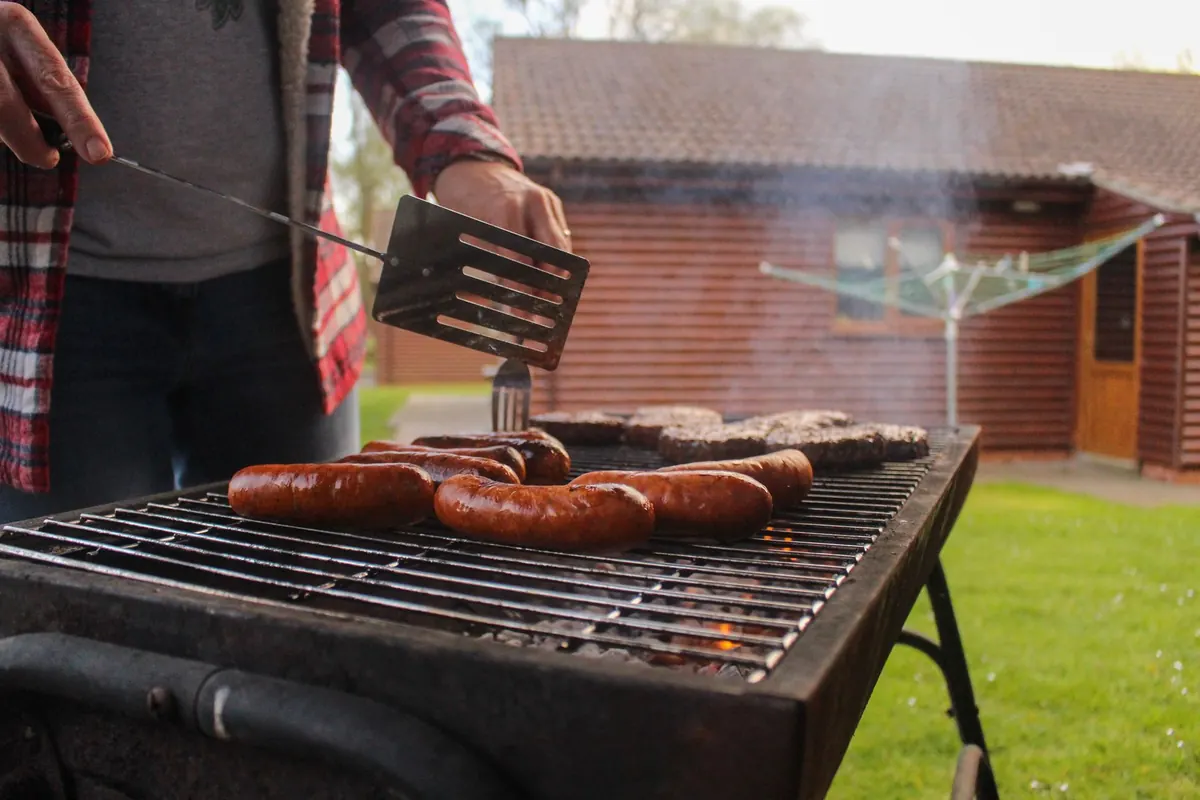
Build a two-zone fire instead. Pile the coals on one half of the grill, or set the gas burners on one side only. Sear over the hot zone, then slide food to the cool side to finish with the lid down. Then work backwards from the time you actually want to eat:
- Longest first: bone-in chicken pieces, whole ears of corn in their husks, thick vegetable skewers — roughly 25 to 40 minutes over indirect heat.
- Middle: sausages, halloumi, thick steaks — sear them, then move them aside.
- Last: burgers, thin cuts, prawns and vegetable slices, which need only a few minutes a side.
- Rest before serving: give burgers about five minutes and larger cuts ten to fifteen. This is not fussiness; it keeps the juices on the plate instead of the cutting board.
An instant-read thermometer takes the guesswork out of it. Chicken should reach 165°F, burgers 160°F, and pork 145°F. If you are unsure about safe temperatures for anything you are cooking, check current guidance from a reliable food safety source.
3. Forgetting that the sun moves
A four o'clock start in July means hard sun on the patio for three hours. Guests will drift indoors, and the party quietly splits into the people outside and the people in the kitchen.
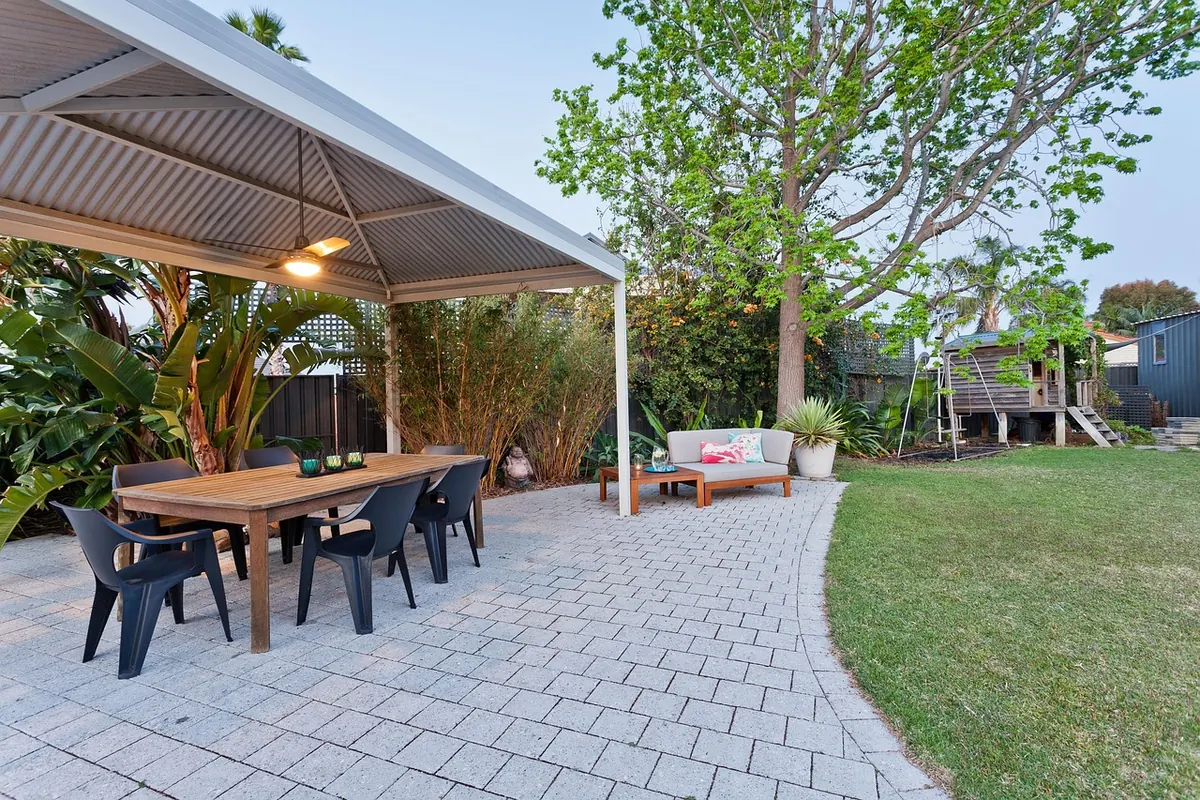
Sort out shade before you plan the menu. A weighted pop-up canopy over the main table works for almost any yard, and a patio umbrella can be moved to wherever people are actually standing. If your space is tight, shift the start time to late afternoon or early evening, when the light softens and the heat drops. Put the drinks station in the shade too — nobody wants to stand in full sun to pour a glass of water.
4. Counting chairs instead of plate space
Most hosts worry about seating and forget that the real shortage is flat surfaces. People can perch on a bench or a step, but they cannot hold a loaded plate, a drink and a napkin without somewhere to set things down.
Add one folding table near the food, and a couple of small side tables or upturned crates with a board on top scattered around the yard. Pull the drinks away from the food queue so two lines do not form in the same spot. Keep one or two proper chairs with backs free for older guests or anyone who needs them, and have a few blankets or cushions on hand for people who prefer the grass.
5. Running short on ice, drinks and sides
Ice disappears faster than anything else at a summer gathering. A bag goes into the drink tub, another goes into the cooler, and by dessert you are serving lukewarm lemonade. Buy more than you think you need, and keep a spare bag in the freezer as backup.
Use two coolers: one for drinks, which will be opened constantly, and one for anything perishable, which stays shut. Keep the food cooler out of direct sun. As for the food itself, general food safety guidance is to leave perishable items out for no more than two hours — one hour if the temperature is above 90°F. Set out smaller portions and refill from the fridge rather than putting out the whole bowl at once. Always have a generous jug of water and a decent non-alcoholic option; not everyone drinks, and everyone gets thirsty.
6. Becoming the host who never sits down
If you are the only person who knows how the grill works, you will spend the entire party facing the coals with your back to your guests. That is a shame, and it is avoidable.
Cook in batches and serve as you go, so there is always something coming off the grill and you are never racing a single deadline. Set everything out on a sheet pan before anyone arrives — oiled, seasoned, in the order it will cook. Ask one friend to act as grill co-pilot while you grab a plate, and let the sides be things you made earlier in the day, served at room temperature. A loaf of good bread, a tomato salad and a bowl of something cold will do more for the table than a complicated dish you are still plating while everyone else eats.
Your five-minute walkthrough before the first guest arrives
- Light the grill so it is ready before people show up.
- Confirm the shade, and move the drinks into it.
- Count plate surfaces, not just chairs, and add one extra table.
- Fill the ice tub, shut the food cooler, and set out a jug of water.
- Put a bin bag and a bottle bucket where people will actually see them.
None of this requires a bigger yard, better equipment or a talent for cooking. It just means deciding, an hour ahead of time, where people will stand, what they will set their plates on, and when the food will be ready. Do that, and you get to enjoy your own barbecue.
Photo: Harvey Ashwin / Pexels