By four o'clock on a July afternoon, a west-facing patio stops being a pleasant place to sit and starts acting like a griddle. Shade is the fix, and the three options most homeowners weigh — pergola, retractable awning, shade sail — solve that problem in completely different ways. One is a permanent outdoor room. One rolls up into a housing and vanishes. One is tensioned fabric that costs a fraction of either. The right pick comes down to four things: sun angle, wind, rain, and what you're willing to spend.
Start With the Sun, Not the Catalog
You don't need a shade structure. You need shade in a specific spot at a specific hour. Before you shop, spend one sunny day noting where the shadow line falls at 11 a.m., 2 p.m. and 5 p.m. That single exercise eliminates half the options on the market.
Direction matters more than anything else. A south-facing patio takes high, brutal midday sun and needs cover directly overhead. A west-facing patio gets low, raking, late-afternoon sun that slides in sideways — vertical or angled cover handles that far better than a flat roof, which is exactly why awnings shine on west walls. An east-facing patio is only uncomfortable in the morning, so full-time shade may be overkill.
Season matters too. Summer sun sits high; spring and fall sun sits lower and reaches much farther under a fixed roof. Plenty of people test a structure in July, love it, then find themselves squinting in April because the sun is now under the rafters.
Measure the shaded area you actually want — a table for six needs a wide footprint, two loungers need much less — then match the structure to that size, not to the patio's total square footage.
Pergolas: Structure You Can Build On
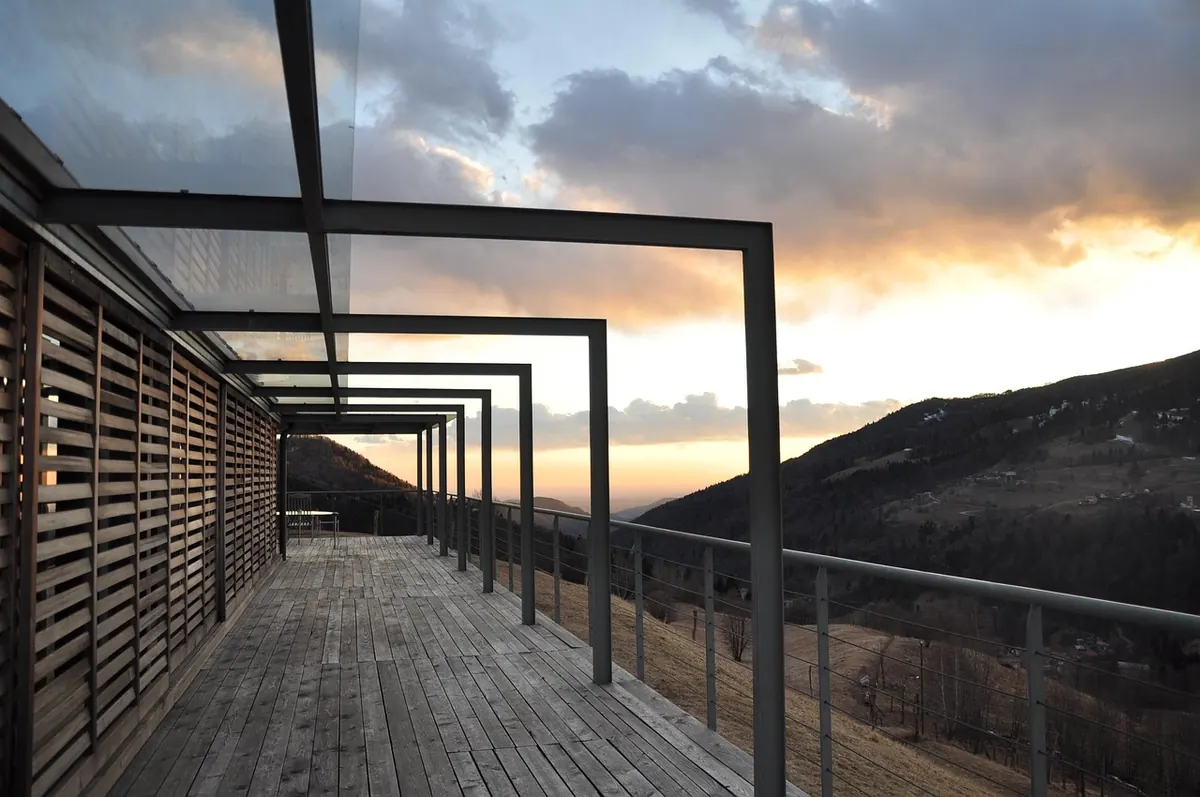
A traditional open-rafter pergola is mostly a frame for dappled light. It casts pretty stripes of shadow and cuts almost no heat. If you want genuine relief, you're choosing between slats set close together, a louvered roof you can angle or close, a solid roof, or a fabric top stretched over the beams. Those are four different products with four different price tags and wind profiles.
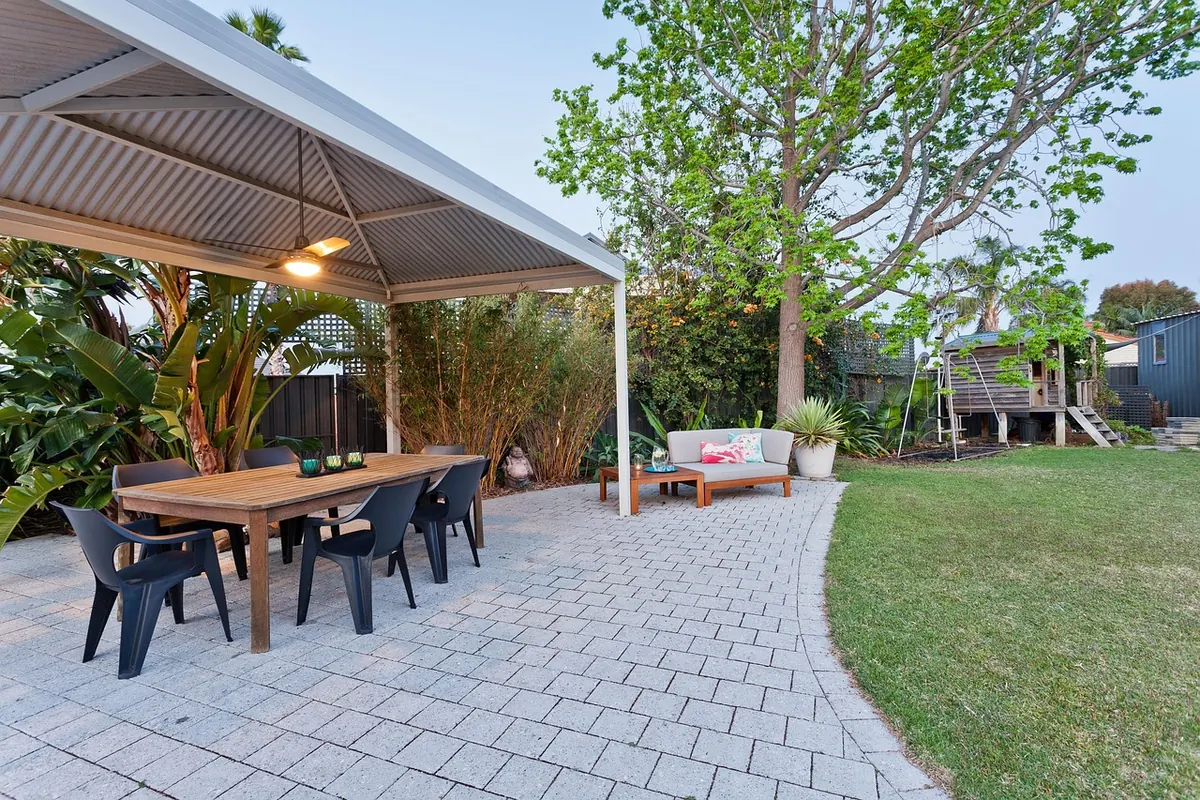
Where pergolas win is permanence and definition. They turn an open slab into a room, they hold lighting and fans, and a properly anchored timber or aluminum frame handles weather better than anything else on this list. They also cost the most, particularly louvered roofs and anything with wiring run to it.
Rain is the honest limitation. An open pergola gives you nothing. A solid roof gives you real cover, but it needs designed drainage, and attached versions often need a permit. Be clear with yourself about which one you're buying.
Retractable Awnings: Shade You Put Away
An awning mounts to a wall or fascia and projects outward, with an adjustable pitch so you can follow the sun as it drops. That adjustability is the whole appeal: full extension at 2 p.m., pulled back when the sun moves on, gone entirely by winter.
They suit house-attached patios with afternoon sun, and they're usually cheaper than a well-built pergola — though motorized models with wind sensors close that gap quickly. Two practical requirements: a solid mounting surface (masonry or structural framing, not vinyl siding without proper blocking), and the discipline to retract it.
Wind is an awning's enemy. Extended arms are a big lever, and gusts bend hardware. Rain is the second issue: a taut fabric canopy can pool water, and pooled water wrecked arms are a common repair. Quality marine-grade fabric shrugs off a light shower, but storms are a retract-and-walk-away situation. Expect to clean the fabric yearly and stow it for the off-season.
Shade Sails: Cheap, Cool, and Fussy About Anchors
A shade sail is tensioned fabric — triangle or square — stretched between three or four solid anchor points. Because hot air escapes upward instead of being trapped under a solid roof, sails feel cooler than their shade percentage suggests. That's their best-kept advantage.
The catch is the anchors, not the fabric. A sail needs genuinely structural attachment: posts set in concrete, or a wall with proper fasteners. Straps wrapped around a tree trunk are a bad idea; they can damage the bark and the tree over time. And a sail must stay under real tension, pitched enough that rain runs off. A loose or flat sail flaps itself to death and collects water like a bowl.
Treat it like what it is: a sail. In high wind, either it's engineered and anchored for the load or it should come down. Most homeowners remove sails for storm season and winter, which is easy — and also means they're not really permanent shade.
Sun, Wind, Rain and Snow at a Glance
- High midday sun: anything overhead works — solid pergola roof, closed louvers, wide awning, well-angled sail.
- Low afternoon sun: awnings and adjustable louvers win, because you can angle them into the light. A fixed flat roof won't help.
- Wind: anchored pergolas handle it best. Awnings retract. Sails depend entirely on tension, anchors and whether you take them down.
- Rain: only a solid roof or closed louvered roof gives real cover. Awnings manage drizzle. Open pergolas and sails offer none.
- Winter: pergolas stay put and earn their keep. Awnings and sails usually come down, so factor in storage.
Budget, Installation, and the Rules
Think in terms of total installed cost, not sticker price. A bargain sail with new concrete footings and two powder-coated posts is not a bargain any more. The general order runs roughly from shade sail at the low end, to fixed open pergola and retractable awning in the middle, to louvered or roofed pergola with lighting at the top — but quotes vary widely by region, size and material, so get two or three for the same scope.
Two things to check before you commit money. First, your local building department: attached structures, anything electrical, and structures over a certain size may need a permit, and some are restricted outright. Second, your HOA or neighborhood covenants, which often regulate shade sails and awning colors specifically. This is general guidance only — confirm the requirements for your address with your local building office, and use a licensed contractor for anything attached to the house or involving wiring.
A Quick Way to Decide
If you want a permanent outdoor room, plan to stay in the house for years, and can spend the most, build the pergola — and budget for a real roof or louvered top if you want shade that actually cools.
If afternoon sun hits a wall of your house and you like the idea of shade that disappears, buy the awning. Choose a solid mounting surface, add a wind sensor if the budget allows, and commit to retracting it.
If money is tight, your patio gets fierce overhead sun, and you already have — or are willing to pour — solid anchor points, go with a sail. Just pitch it properly, tension it hard, and take it down before the weather turns.
And don't rule out mixing them. An awning over the dining wall plus a sail across the far corner covers an L-shaped patio better than either one alone, often for less than a single large pergola.
Photo: karrice / Pixabay