A balcony of three square metres can be genuinely pleasant, or it can be a corridor with a dead plant on it. The difference is rarely budget. It is measurement. Most small-balcony disappointment comes from furniture that looked compact in the shop and turned out to leave the door unable to open past it. Before you think about style, spend twenty minutes with a tape measure and a pencil.
Start with a tape measure, not a mood board
Measure more than the floor area. Work through this list and write every number down; you will refer to it every time you open a product page.
- Width at floor level and again at railing height. Some railings taper inward and quietly steal space.
- Depth at the left, centre and right. Balconies are rarely square, and the narrowest point decides what fits.
- Railing type and height. A solid or slatted railing blocks the view when you are seated, which changes the seating height you should be looking for.
- Door swing. Open the door as far as it goes and mark the arc with painter's tape. Nothing lives inside that arc.
- Fixed obstacles: drainage grates, taps, air-conditioning units, boxes and drainpipes.
- Sun and wind. Note which half is shaded at the hour you actually use the balcony, and where the wind hits when the building funnels it.
Then draw the outline on paper — one square equals 10 cm is plenty — and mark the door arc and every obstacle. When a table arrives in your drawing as a rectangle that swallows the walkway, you have saved yourself a return.
Choose a layout that protects one clear path
Every small balcony needs one non-negotiable feature: a walking route from the door to the far end. Aim for about 60 cm of clear width. If a piece of furniture narrows that route, it is the wrong piece, however charming it looked online.
Three layouts cover most narrow balconies. The corner bistro pushes a small table and two chairs into the far corner, leaving the near half empty. The long bench runs seating along the wall or railing side and keeps the opposite edge free, which works well on balconies under about a metre and a half deep. The two-zone split gives roughly two-thirds of the length to seating and one-third to plants or storage, so the space reads as a room rather than a corridor. Pick one and stay loyal to it; mixing layouts is how balconies fill up.
Scale down the seating
Depth matters more than width out here. A chair that is 55 cm wide but only 60 cm deep including its backrest will fit where a deep lounge chair never will. Look for seats around 40-45 cm high — comfortable, and low enough that a solid railing does not cut across your eyeline — with backs that tuck close to the railing.
Good candidates for tight spaces:
- A two-seat bistro set with slim, stackable chairs.
- A storage bench along the wall, with a cushion on top and a lid underneath.
- Folding or nesting chairs that hang on hooks when the balcony is not in use.
- A small stool that works as a side table, a footrest, or a spare seat for a guest.
Skip armrests unless the balcony can spare the extra 10 cm on each side. And resist buying four seats for a two-person balcony; two comfortable chairs get used, four cramped ones do not.
Tables that fold, stack, or clamp
A round or square bistro table around 60 cm across seats two people for coffee and a plate. Anything larger starts to dictate the whole layout. If even that feels like too much, a wall-mounted drop-leaf table is the best small-balcony invention going: flat against the wall when you are not using it, a proper dining surface when you are. Check with your building before drilling into anything, and use fixings suited to the wall material.
Height matters as much as footprint. A dining table sits around 70-75 cm; a coffee or side table around 40 cm. Measure your chair's seat height before ordering, or you will end up with a table that is technically small enough and practically unusable. Nesting tables and clamp-on railing trays handle drinks and a book when you have no floor space to spare.
Storage that earns its footprint
Every item should do at least two jobs. A weatherproof bench stores cushions and doubles as seating. A lidded storage box in the corner holds gardening tools, and a tray on top turns it into a side table. Vertical space is usually the most wasted resource: a slim shelving unit against the wall, hooks for folding chairs and railing planters all use height instead of floor.
Keep soft furnishings — cushions, throws, seat pads — in a lidded box or bring them inside. Damp fabric is what makes a small outdoor space feel neglected.
Materials, weight, and weather
Powder-coated aluminium is light, rust-resistant and easy to shift when you want to sweep. Teak and acacia are durable but need occasional oiling if you want them to keep their colour. HDPE and synthetic rattan handle sun and rain without much fuss. Steel frames rust where the coating is scratched, and glass-topped tables are heavy and awkward to move alone.
Check your building's rules before attaching anything to walls or railings, and be sensible about weight — furniture, planters and people add up. On an upper-floor balcony, keep heavy items closer to the building than out at the railing, and secure or bring in anything light when wind is forecast.
The sit-down test
Before you call the balcony finished, sit down. Put a drink on the table. Reach for it without standing. Then stand up without moving anything out of the way, walk to the door and open it fully. If all of that works, the layout is right, whatever it looks like from the doorway.
Small balconies reward restraint. Two good chairs, one table that folds, and one piece of storage that hides the clutter will give you more usable space than a crowded set that only looks generous in a photograph.
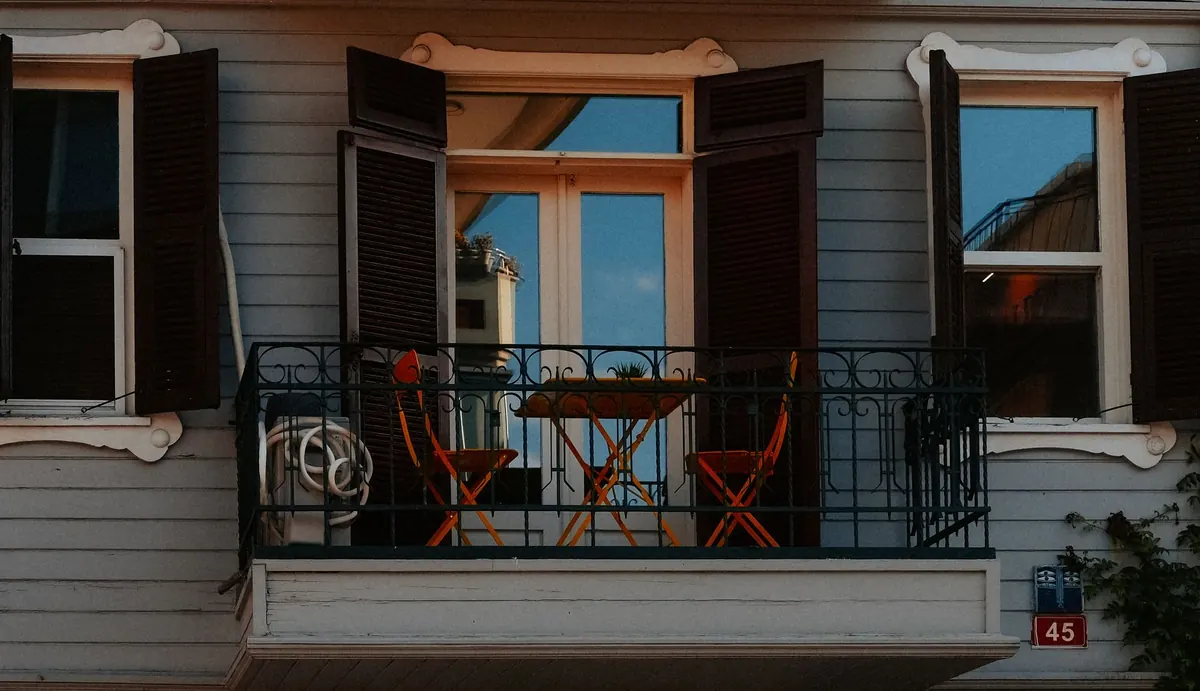
Photo: Ezgi Kaya / Pexels